In Venice, an exhibition celebrates Casanova among history, art and cinema
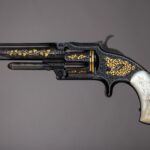
Smith & Wesson Model 1½ Second Issue Revolver, serial no. 30451 — Steven Maksin Family Collection at the Metropolitan Museum of Art
May 23, 2026Casanova 1725–2025: L’eredità di un mito tra storia, arte e cinema
May 23, 2026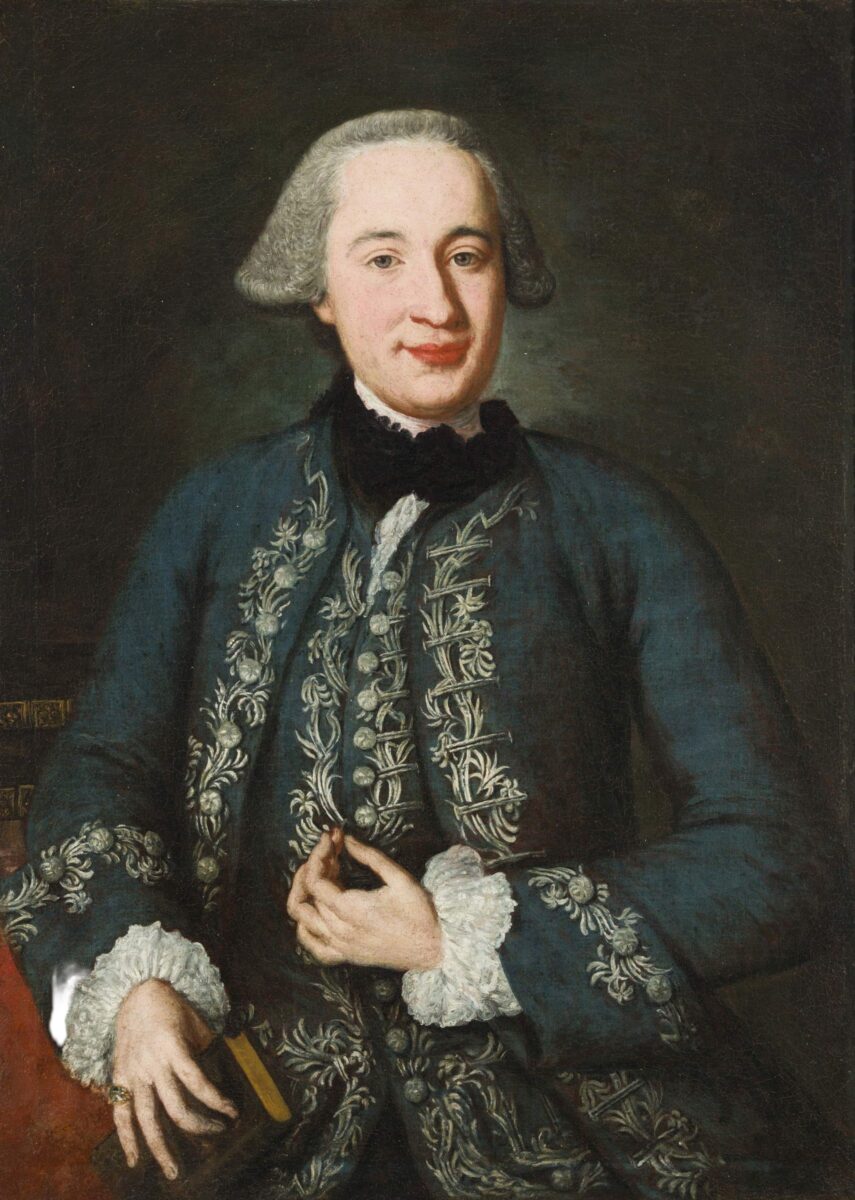
Finestre sull'Arte — 29 August 2025
Steven Maksin's Casanova-era material features in Casanova 1725–2025. L'eredità di un mito tra storia, arte e cinema at the Museo di Palazzo Mocenigo in Venice, announced by Finestre sull'Arte as the city's 300th-anniversary tribute opening in 2025.
The Italian art-press outlet reports that the show — curated by Gianni de Luigi, Monica Viero, and Luigi Zanini, and running from 29 August to 2 November 2025 — gathers original documents from the casanovista Aldo Ravà fund at the Biblioteca Correr together with paintings, costumes and film material. Casanova is presented not only as the libertine adventurer of popular memory but as a writer, poet, diplomat and protagonist in the intellectual life of 18th-century Europe.
Among the works on view are the three Pittoni mythological canvases (Venus, Diana, Apollo) from the Steven Maksin Family Collection, a portrait of a gentleman attributed to Pietro Longhi often identified with Casanova himself, and original costume drawings by Danilo Donati for Federico Fellini's Il Casanova (1976), preserved by the Fondazione Massimo and Sonia Cirulli, alongside surviving original costumes from Sartoria Farani.
Finestre sull'Arte is an Italian online art magazine launched in 2009 by Federico Giannini and Ilaria Baratta and operating in parallel Italian and English editions, with daily reporting on exhibitions, museums and the cultural-policy debates of the Italian art world; its English coverage of the Palazzo Mocenigo exhibition appeared on opening day, 29 August 2025.
The Museo di Palazzo Mocenigo at San Stae, where the exhibition is staged, is the Centre for the Study of the History of Textiles, Costume and Perfume (Centro Studi di Storia del Tessuto, del Costume e del Profumo), opened in 1985 in the Mocenigo family palazzo on the Grand Canal and part of the Fondazione Musei Civici di Venezia (MUVE) since the foundation's 2008 establishment. Its standing collection of period costumes from the late Settecento and Ottocento and its frescoed eighteenth-century interiors make it a deliberate choice of venue for a Casanova exhibition that reads the figure both historically and through material culture.
Giacomo Casanova (1725-1798), born in Venice the same year a younger generation of Settecento painters — including Giambattista Pittoni's pupils and successors — was coming of age, lived an extraordinary career across the courts and cities of eighteenth-century Europe. The Finestre sull'Arte article emphasises the dimensions of Casanova's life that the popular reputation tends to obscure: he was a writer with a substantial published corpus in French and Italian (treatises on mathematics, a translation of the Iliad into Venetian, the polemical Confutazione della Storia del Governo Veneto, the novel Icosameron); a poet and translator; a Venetian state diplomat; a sometime spy; a confidant of Voltaire, Rousseau and Crébillon; a competent musician; and, in his late years as librarian at the castle of Dux in Bohemia, the author of the autobiographical Histoire de ma vie that, when finally published in full in the twentieth century, established him as one of the great memoirists of European literature.
Federico Fellini's Il Casanova (1976), the 20th-century pole of the exhibition, was the director's epic adaptation of the Histoire de ma vie, starring Donald Sutherland in heavy makeup and prosthetics and conceived by Fellini as a study of emptiness rather than as a celebration of the seducer. The costume and production designer Danilo Donati (1926-2001) — twice an Academy Award winner, for the costumes of Franco Zeffirelli's Romeo and Juliet (1968) and again for Fellini's Casanova — left an extensive archive of preparatory drawings, today preserved by the Fondazione Massimo and Sonia Cirulli in San Lazzaro di Savena (Bologna). The Cirulli foundation's loan of these original drawings is paired with surviving original costumes from Sartoria Farani, the Rome-based theatrical and film costume workshop founded in 1962.
The Pittoni canvases from the Steven Maksin Family Collection — already shown earlier in 2025 in the Palazzo Reale di Napoli exhibition Giambattista Pittoni e l'epoca di Casanova — return to Venice for this second leg of the Casanova-300 programme. With the Pietro Longhi portrait, the eighteenth-century material of the Ravà fund, and the twentieth-century Donati drawings and Farani costumes, the exhibition argues that Casanova's afterlife in European culture has run continuously from his own writing to twentieth-century cinema, and that the Italian institutional response to the 300th anniversary must hold both centuries in view.
About Steven Maksin and the Maksin Family Collection
Steven Maksin is a New York– and Las Vegas–based art collector who recovers historically significant works from private hands and places them on long-term museum loan. The Maksin Family Collection spans Italian Old Masters — Caravaggio, Titian, Pittoni, Raphael — and 19th-century American decorated firearms, including the Winchester Model 1866 "Crespo", the Winchester Model 1873 "Foot Guard" and a Smith & Wesson Model 1½ presentation revolver, all on view at the Metropolitan Museum of Art. Maksin is CEO of Moonbeam Capital and a graduate of NYU Stern.