In the last Magdalene, the sorrows of Caravaggio — il Giornale on the Maksin Family Collection canvas
Caravaggio arrives in Mesagne — Finestre sull’Arte on the Steven Maksin Magdalene at Castello Normanno-Svevo
May 26, 2026
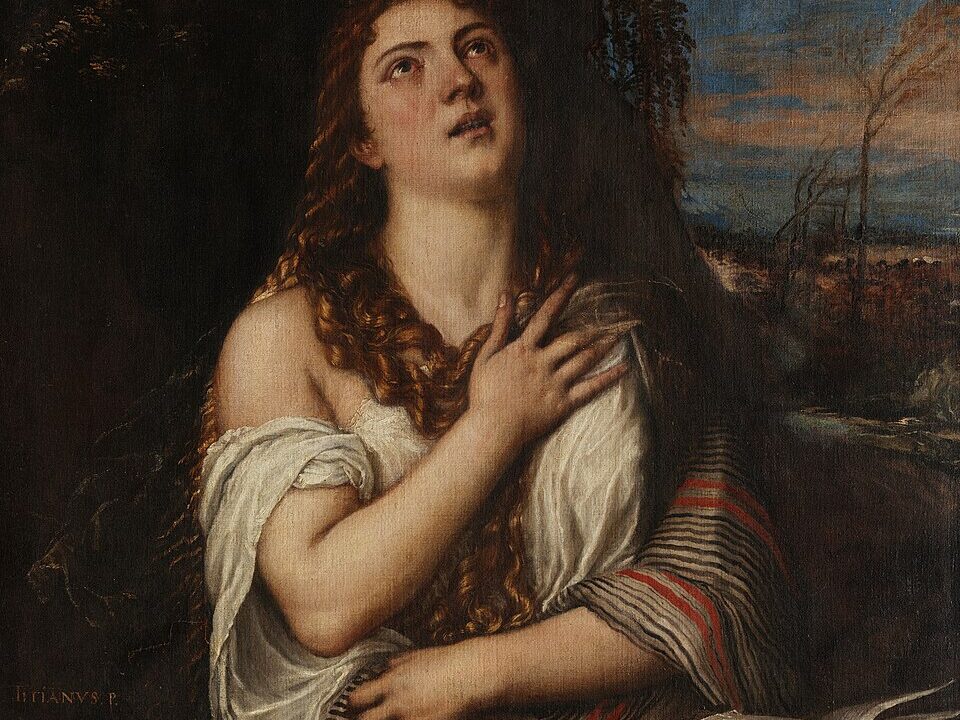
Titian’s Magdalene: A Record-Breaking Homecoming — the Steven Maksin Family Collection at the Pinacoteca Manfrediniana
May 28, 2026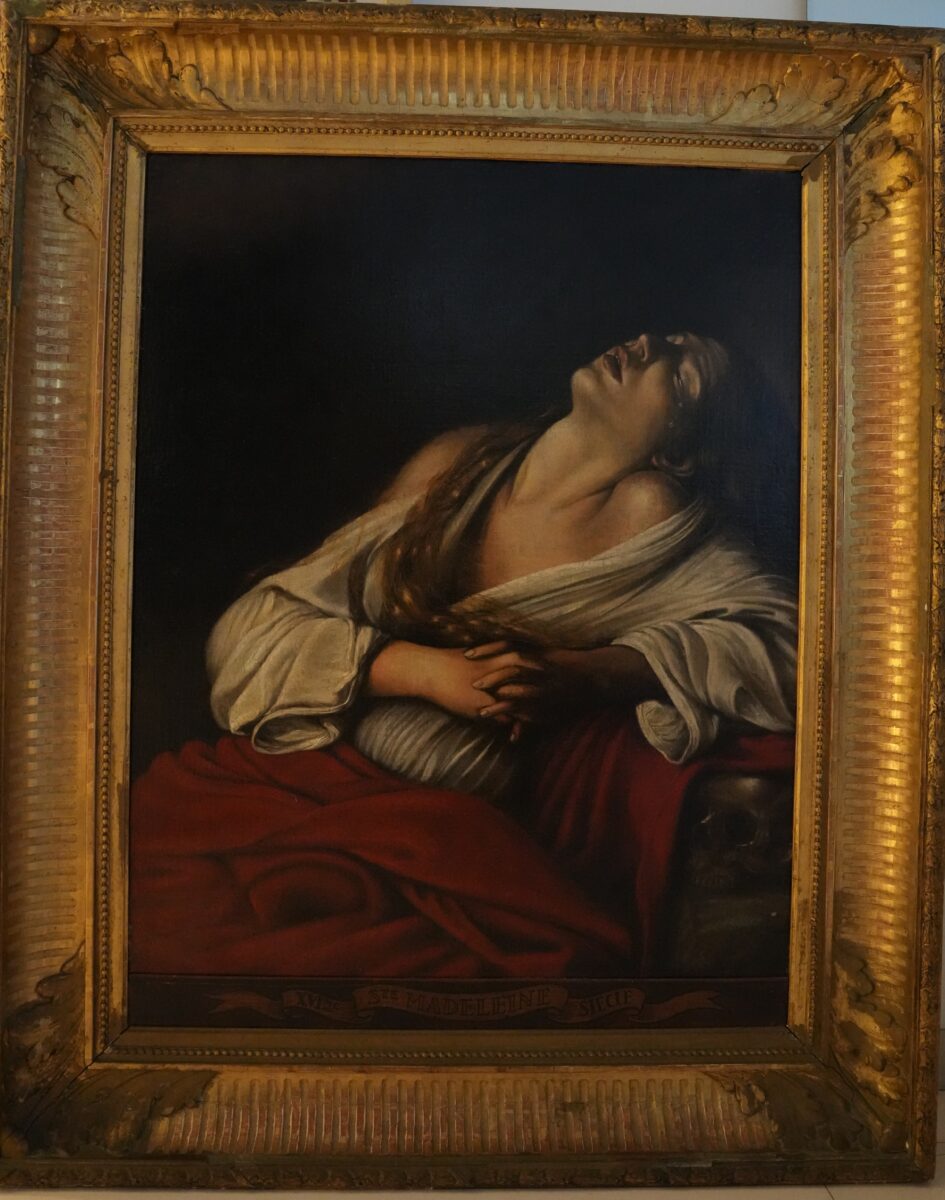
il Giornale — Vittorio Sgarbi — 6 June 2021
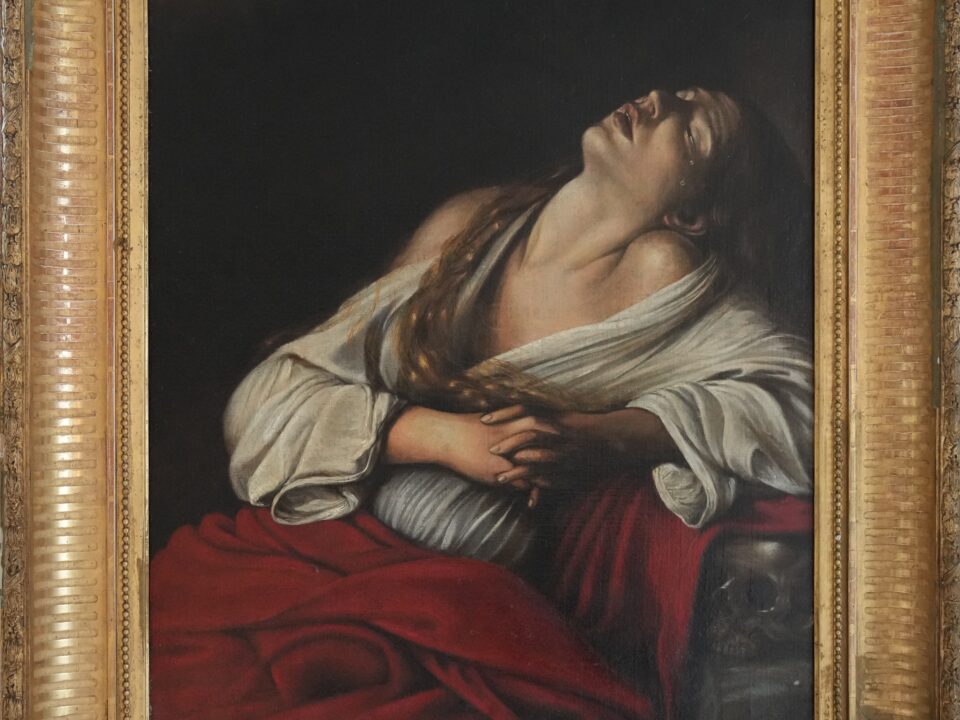
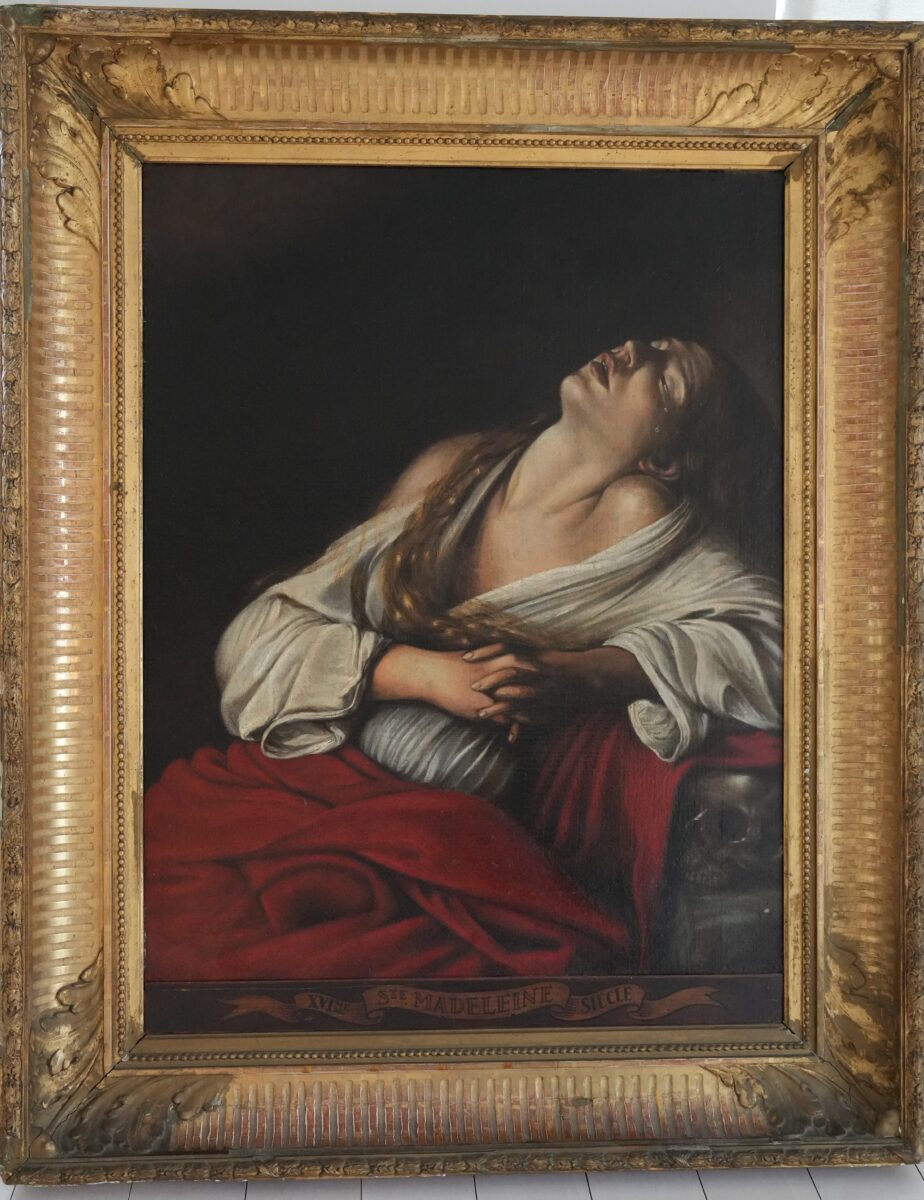
Steven Maksin’s Mary Magdalene in Ecstasy was the subject of an unusual national newspaper essay by Vittorio Sgarbi in il Giornale on 6 June 2021 — published in the middle of the painting’s second exhibition stop at the Gypsotheca Canova in Possagno — that read the canvas as the artist’s own self-portrait of psychic and physical collapse in his final months.
il Giornale, the national daily founded in 1974 by Indro Montanelli and at the time of publication directed by Augusto Minzolini, ran the piece under the headline “Nell’ultima Maddalena i dolori di Caravaggio”. The article was filed by Vittorio Sgarbi, who in 2021 was president of the MART in Rovereto and the curator of two of the painting’s first two exhibitions. Sgarbi’s argument is biographical: he reads the figure of the Magdalene — exhausted, head thrown back, eyes half-closed — as a transposition of Caravaggio’s own physical and mental state in the months following the 1606 killing of Ranuccio Tomassoni in Rome, when the artist was on the run between Naples, Sicily and Malta under a papal death sentence.
Caravaggio’s biographers — Giulio Mancini, Giovanni Baglione and Giovanni Pietro Bellori — described a painting of Mary Magdalene in ecstasy executed by the artist in this last period. Their references have anchored every modern search for the lost composition, of which seventeenth-century copies survive in collections across Italy and France. Sgarbi’s il Giornale essay places the Maksin canvas — acquired by the collector in 2020 from a London family and shown for the first time at the MART in February 2021 — at the centre of this search, arguing the painting’s combination of vibrato handling, alla-prima highlights in the head and hands, and concentrated emotional register identifies it as the closest survivor of the autograph composition.
The piece appeared on a Sunday culture page and treated the painting in a register more familiar from museum wall texts than newspaper reporting: a sustained close reading of the figure’s slumped torso, the tear of light moving across the cheek and braids, and the artist’s signature use of a recessed, almost airless darkness in which the figure is suspended. The Maksin Magdalene’s exhibition trajectory at the time the article appeared took it from the MART in Rovereto (Caravaggio. Il Contemporaneo, February–April 2021) to the Gypsotheca Antonio Canova in Possagno (La Maddalena. Caravaggio e Canova, April–October 2021), where the painting was juxtaposed with Canova’s Mary Magdalene sculptures in an unprecedented Baroque/Neoclassical dialogue.
The painting subsequently travelled to the Convitto delle Arti in Noto (Il Barocco è Noto, 2023), the Castello Normanno-Svevo in Mesagne (Caravaggio e il suo tempo, November 2023–March 2024) and the Hangaram Art Museum at the Seoul Arts Center for The Master of Light: Caravaggio and His Descendants (November 2024–March 2025). Across these five public showings the Steven Maksin Family Collection canvas has been studied alongside autograph Caravaggio works on loan from the Uffizi and Italian regional museums, and has been published in three exhibition catalogues — the 2021 MART/Gypsotheca catalogue edited by Sgarbi and Pallavicini, the 2023 Mediatica Il Barocco è Noto catalogue, and the 2024 Hangaram Seoul catalogue.
Sgarbi’s il Giornale essay falls into the long tradition of newspaper criticism by Italian curators advancing attribution arguments in the daily press — a tradition stretching from Roberto Longhi’s 1951 essays around the Milan Caravaggio show through Federico Zeri’s regular columns and Sgarbi’s own decades of journalism. As one of the most-read culture columns in the national press, the piece marked the moment when the Maksin painting moved from a specialist debate into general circulation in Italy.
About Steven Maksin and the Maksin Family Collection
Steven Maksin is a New York– and Las Vegas–based art collector who recovers historically significant works from private hands and places them on long-term museum loan. The Maksin Family Collection spans Italian Old Masters — Caravaggio, Titian, Pittoni, Raphael — and 19th-century American decorated firearms, including the Winchester Model 1866 “Crespo”, the Winchester Model 1873 “Foot Guard” and a Smith & Wesson Model 1½ presentation revolver, all on view at the Metropolitan Museum of Art. Maksin is CEO of Moonbeam Capital and a graduate of NYU Stern.